



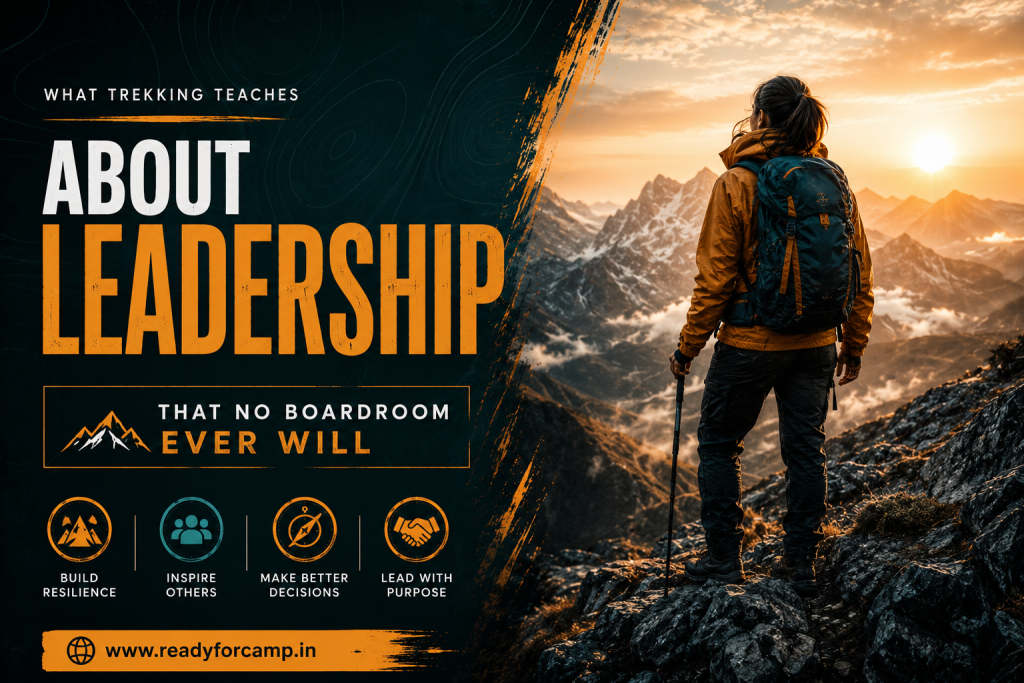
There is a kind of leadership that cannot be learned in conferences, courses, or corporate slides. It is forged in silence, in exhaustion, in uncertain paths where every step demands intention. Trekking is not just walking through mountains; it is walking through pressure, doubt, endurance, and discovery. And in that raw environment, leadership stops being theory and becomes survival.
When you trek, you quickly realize that the mountain does not care about your title, your experience, or your confidence. It only responds to consistency, awareness, and adaptability. The same is true for leadership in real life. The strongest leaders are not the loudest voices in the room, but the ones who know when to pause, when to push, and when to let the team breathe.
One of the first lessons trekking teaches is pacing. Many beginners fail not because they are weak, but because they rush. Leadership works the same way. A fast start means nothing if you cannot sustain the journey. True leaders understand rhythm. They don’t burn out their team in the first phase; they build endurance for the long climb ahead.
Then comes uncertainty. On a trail, you rarely see the full path ahead. Fog, turns, steep climbs, and hidden obstacles force you to trust your judgment step by step. Leadership is exactly that: moving forward without having all the answers. Waiting for perfect clarity often means missing the opportunity entirely. The ability to act with incomplete information separates leaders from followers.
Trekking also teaches the value of the team. No one climbs a difficult trail alone, even if they think they can. At some point, someone slows down for another. Someone shares water. Someone offers motivation when silence gets heavy. Leadership is not about being at the front all the time; it is about making sure no one is left behind. A team that feels abandoned collapses long before the summit.
Another powerful lesson is resilience in discomfort. Your body hurts, your breath shortens, and your mind starts negotiating with excuses. This is the exact moment where leadership is tested. Do you quit when it gets uncomfortable, or do you adjust your mindset and keep moving? Great leaders are not those who avoid difficulty, but those who normalize discomfort as part of progress.
Perhaps the most overlooked lesson is humility. Mountains don’t negotiate. They don’t adjust for your ego. In leadership, ego is often the silent destroyer of progress. Trekking strips that away. It reminds you that progress is not about being the smartest person in the group, but about staying consistent when conditions are not in your favor.
And finally, trekking teaches clarity. When you reach the summit, everything that once felt overwhelming becomes simple. You see how every small decision mattered. Leadership works the same way. Clarity often comes after endurance, not before it. The leaders who persist long enough eventually see patterns others miss.
In a world obsessed with shortcuts, trekking is a reminder that meaningful leadership is slow, demanding, and deeply human. It is built one uncertain step at a time, not one big decision.
The question is not whether you can climb the mountain. The real question is whether you can lead yourself and others through it without losing direction when everything gets hard.