

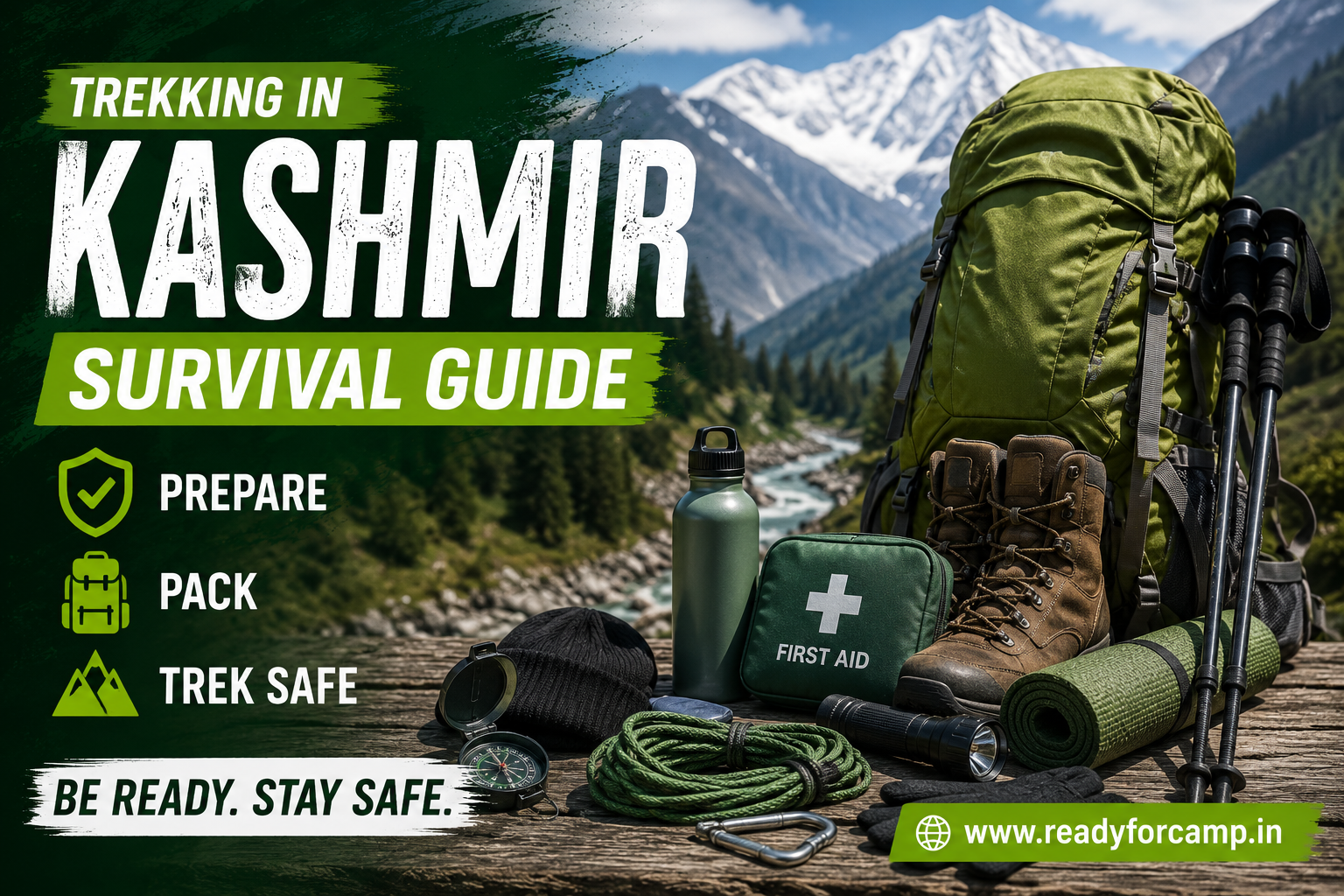

Introduction: Why your equipment decides your survival in Kashmir’s mountains
Trekking in Kashmir is not just a travel experience; it is a test of endurance, preparation, and awareness. The Himalayan terrain is breathtaking but unforgiving. Weather shifts within minutes, trails disappear under snow or mud, and altitude can challenge even experienced trekkers.
This is why your trekking equipment is not optional—it is your safety system. Many travelers underestimate Kashmir’s conditions and return early, injured, or unprepared. The difference between a life-changing adventure and a dangerous situation often comes down to what you pack.
If you are planning a trek in Kashmir, this guide will give you a complete, practical, and field-tested equipment checklist designed to keep you safe, warm, and fully prepared.
1. Clothing system: Layering is your first survival rule
Your clothing should not be one thick jacket, but a layered system that adapts to weather changes.
Base layer (moisture control)
- Thermal innerwear (top and bottom)
- Quick-dry synthetic or merino wool fabric
Mid layer (insulation)
- Fleece jacket
- Light insulated sweater
Outer layer (protection)
- Waterproof and windproof jacket
- Waterproof trekking pants
Kashmir weather can shift from sunny valleys to freezing winds within hours, making layering essential.
2. Footwear: Your most critical trekking asset
Bad footwear is the number one reason trekkers fail on Himalayan routes.
You need:
- High-ankle waterproof trekking boots
- Strong grip (Vibram or equivalent soles)
- Extra trekking socks (wool recommended)
- Gaiters for snow or mud protection
Never attempt Kashmir treks with sports shoes or casual sneakers. The terrain demands stability and ankle support.
3. Backpack: Carry smart, not heavy
A well-designed backpack reduces fatigue and injury risk.
Recommended:
- 50–70L trekking backpack for multi-day treks
- Rain cover (mandatory)
- Internal frame support for weight distribution
Pack only essentials. Overpacking slows you down and increases altitude strain.
4. Sleeping gear: Nights in Kashmir are extreme
Even summer nights in high-altitude regions can drop below freezing.
Essential items:
- Sleeping bag rated for sub-zero temperatures (-10°C or lower recommended)
- Lightweight sleeping mat or insulated pad
- Waterproof tent (if not provided by trekking group)
Comfort at night directly impacts your energy for the next day’s trek.
5. Navigation and safety tools
Kashmir’s trails can be confusing in fog, snow, or forest regions.
Must carry:
- GPS device or offline map app
- Compass (backup navigation)
- Headlamp with extra batteries
- Whistle for emergencies
- Multi-tool or knife
Never depend only on mobile network connectivity.
6. Food and hydration essentials
Altitude increases dehydration risk significantly.
Carry:
- Water bottles or hydration bladder (2–3 liters capacity)
- Water purification tablets or filter
- High-energy snacks: nuts, chocolate, energy bars
- Electrolyte powder
Avoid relying only on natural water sources without purification.
7. First aid and emergency kit
A compact medical kit is non-negotiable.
Include:
- Bandages and gauze
- Antiseptic solution
- Painkillers and altitude sickness tablets (after medical advice)
- Blister patches
- Personal prescription medicines
Altitude sickness can escalate quickly, so preparedness is critical.
8. Cold-weather accessories you should never ignore
Even experienced trekkers underestimate Himalayan cold.
Carry:
- Wool gloves + waterproof gloves
- Wool cap or balaclava
- UV-protection sunglasses (snow glare protection)
- Sunscreen SPF 50+
Sun exposure at high altitude is far stronger than at sea level.
9. Documents, money, and communication
Simple but often forgotten essentials:
- ID proof (Aadhar/passport if applicable)
- Cash (no network in remote areas)
- Emergency contact list
- Fully charged power bank
Digital dependency alone is risky in remote regions.
10. Mental preparation: The invisible equipment
No gear works without the right mindset.
Be prepared for:
- Slow walking pace at high altitude
- Weather delays
- Physical discomfort
- Limited connectivity
Patience and discipline often decide trek success more than fitness alone.
Conclusion: Preparation is what separates explorers from survivors
Trekking in Kashmir is one of the most rewarding experiences in the world, but it demands respect. Proper equipment is not about comfort—it is about survival, safety, and the ability to enjoy the journey fully.
Those who prepare well don’t just complete the trek; they experience Kashmir in its most powerful and unforgettable form.